Guide · the $0 fix
Ventilation, done right
Every CO₂ problem on this site has the same cure: swap inside air for outside air. Free — but there's real technique to it, and most people ventilate the least effective way: one window, opened a crack, forever.
The two-opening rule
Air needs a way in and a way out. One window mostly trades air with itself; two openings on different walls — ideally opposite sides, or one low and one high — create flow-through that exchanges a room's air in minutes instead of hours. If a room has only one window, its second opening is the door plus a window elsewhere in the home.
Short and hard beats long and gentle
The German-speaking world has a word for the right technique — Stoßlüften, "shock ventilation": everything wide open, 3–10 minutes, then closed again. You exchange the air (light, fast to replace) without cooling the walls and furniture (heavy, slow to re-heat) — which is why it works even in winter, and why the tilted-window-all-day habit wastes heat while barely moving CO₂.
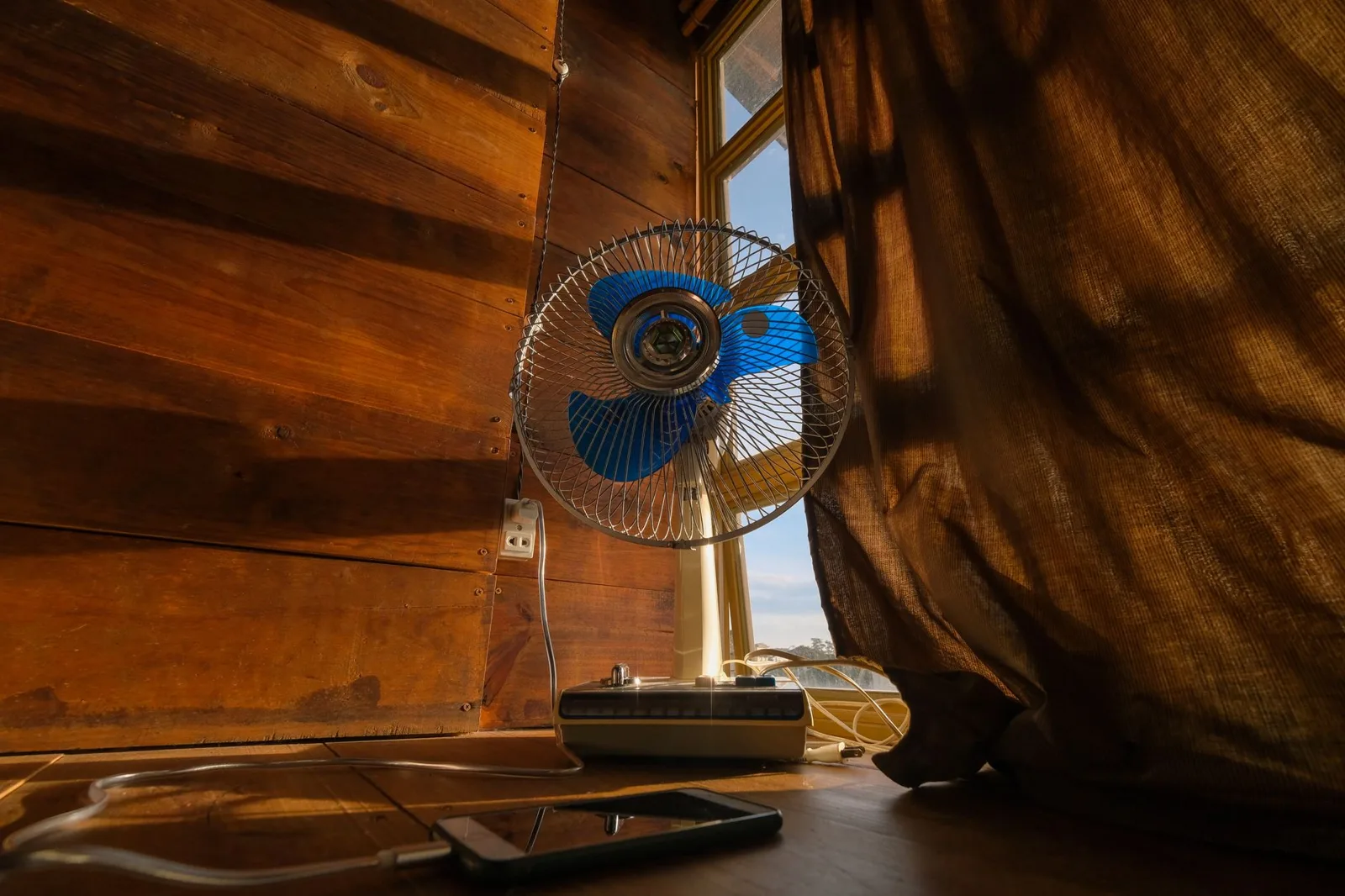
Use the fans you already own
- Bathroom and kitchen exhaust fans pull air out of the whole home — run one with a distant window cracked and you've built a crude whole-house ventilator.
- A box fan in a window blowing out, with an inlet open across the home, flushes a house fast after cooking, cleaning, or a party.
- Ceiling fans mix; they don't exchange. Comfort yes, CO₂ no.
Let the number drive
With a monitor, ventilation stops being a vibe: open up when it passes ~1,200, close when it's back near 600. Two weeks of that and you'll know your home's rhythm by heart — how fast dinner guests fill the living room, how long a flush actually takes (usually: less time than you think).
When outside air is the problem
Smoke days invert the rule: filter continuously, flush briefly in the clean windows between waves — the sequencing is in the smoke guide. Pollen season: ventilate after rain, filter otherwise. Noise and security: a window cracked plus a purifier is a legitimate compromise — particles handled, CO₂ at least dampened.
ERV/HRV, one paragraph
If you're renovating: energy/heat-recovery ventilators exchange indoor and outdoor air continuously while keeping most of the heat — the grown-up version of everything above, and the reason new tight-built homes don't suffocate. Worth asking your HVAC contractor to price.
Sources
- US EPA — How much ventilation do I need?
- ASHRAE Standards 62.1 / 62.2 (ventilation rates for commercial and residential buildings).
- The numbers behind "open up at 1,200": our cited CO₂ reference.